
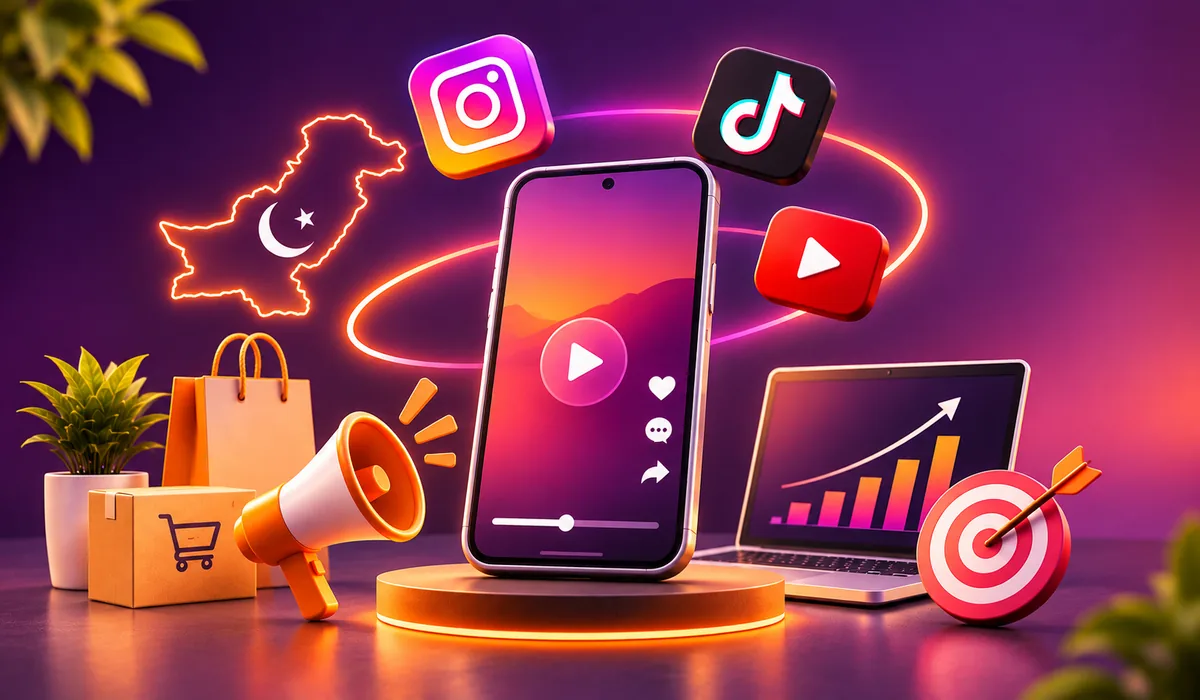
Influencer marketing in Pakistan connects brands with creators through sponsored content, gifted products, commissions, or hybrid partnerships.
Influencer marketing in Pakistan is when a brand pays or partners with social media creators so their content reaches an audience that already trusts them. It usually runs on TikTok, YouTube, Instagram, and Facebook, and it works through sponsored posts, free products, commissions or a mix of all three. This guide explains how it works, which creators and platforms to consider, how to run a first campaign, and the risks a Pakistani brand should plan for.
What is influencer marketing?
Influencer Marketing Hub describes influencer marketing as a strategy where brands collaborate with creators to reach an audience that already trusts them.
The creator makes the content in their own voice, and the brand supplies the product, the brief, and the budget. In Pakistan, the same idea is shaped by local habits. Creators often speak in Urdu or a mix of Urdu and English, shoppers often pay by cash on delivery, and audiences cluster around a few big platforms. Each of those points affects how you plan a campaign.
Why influencer marketing matters for Pakistani brands
The audience is large and mobile-first. DataReportal's Digital 2026 report counts 117 million internet users in Pakistan, 45.6% of the population, and 79.9 million social media user identities, or 31.2%. It also counts 194 million cellular mobile connections.
Platform reach differs. DataReportal's late 2025 ad reach figures show YouTube at 54.3 million, Facebook at 52.9 million and Instagram at 22.4 million, while TikTok's ad tools show 79.9 million users aged 18 and above. These are ad audience estimates, not monthly active users, and the report warns they can be revised.
Brands are already using it. A local industry report, covering Instagram campaigns in 2021 and 2022, found fashion led in campaign volume, while transport and telecom outperformed fashion and beauty on engagement.
Benefits of influencer marketing for brands
- Trusted voices. Shoppers often take a creator's view more seriously than a brand advertisement, because the creator already has the audience's attention.
- Local relevance. Creators know the language, humour, festivals, and shopping seasons of their audience, from Ramadan and Eid to wedding season.
- Flexible budgets. A small brand can start with a few nano or micro creators and scale what works, instead of committing to a large media buy.
- Usable content. Good creator videos and photos can often be reused in your own channels, if the contract grants usage rights.
- Measurable sales. With tracked links and discount codes, results can be tied to individual creators, including completed cash-on-delivery orders when merchants confirm the purchases. See Voosha's rate guide.
Types of influencers: nano, micro, macro and mega
Creators are usually grouped by follower count:
- Nano: 1,000 to 10,000 followers. Small, tight communities, often the best fit for a first test.
- Micro: 10,000 to 100,000 followers. A common starting point for local brands.
- Macro: 100,000 to 1 million followers. Wider reach, with higher fees.
- Mega: over 1 million followers. Celebrity-level reach, usually for awareness.
Sources draw these lines differently, and Shopify notes that tiers are directional because rates depend more on audience quality, engagement, and niche than on follower count. Pick creators by how well their audience matches your customer, not by the size of their number.
Which platforms work best in Pakistan?
- TikTok. DataReportal reports broad advertising reach among users aged 18 and above; short creator videos can help products reach new audiences.
- YouTube. long reviews and tutorials that keep working after publishing, with a large reach.
- Facebook. a broad, family and community audience, and a place to reach shoppers outside the big cities.
- Instagram: smaller in reach, but central for fashion, beauty, food and lifestyle, where visual content sells.
Choose the platform where your buyers already spend time, then match the format: Reels and short videos for discovery, long videos for considered purchases.
How to run your first influencer campaign in Pakistan
- Set one goal. Awareness, traffic or sales each call for different creators and measures. Profit's reporting on Pakistan's market noted that awareness campaigns are hard to tie to sales.
- Set a budget. Rates vary by tier, platform, niche, usage rights and season, so use a current rate guide, such as Voosha's influencer rates in Pakistan, before you ask creators for quotes.
- Choose creators for fit. Check whether comments look real and whether the audience matches your customer. Fake followers and engagement are a known problem.
- Write a clear brief. State the message, must-say points, things to avoid, format, deadline, and approval steps.
- Approve and disclose. Review content before it goes live and make sure the post is clearly marked as sponsored. Profit's reporting highlighted campaigns revealed as sponsored only after launch, which raised transparency concerns.
- Track and pay. Give each creator a tracked link or discount code, so sales can be tied to them, then pay on delivery and rebook the creators who perform.
Which metrics to track?
Pick measures that match your goal, and agree with creators before the campaign starts.
- Reach and views show how many people saw the content, which suits awareness goals.
- Engagement rate compares likes, comments, and shares with audience size, and helps you spot weak or inflated audiences.
- Clicks on a tracked link show how many viewers were interested enough to visit your store.
- Conversions from discount codes and links show sales per creator. This is the clearest measure for a sales campaign.
Compare creators on cost per sale, not on views alone. A smaller creator with real buyers can beat a bigger one with an inactive audience. For cash-on-delivery campaigns, track delivered orders separately from orders placed and exclude cancelled or returned orders from confirmed sales. For a deeper explanation, read how Pakistani brands can measure creator ROI.
How Voosha helps brands run influencer marketing in Pakistan
Voosha is a self-serve influencer marketing platform and creator marketplace for brands in Pakistan, not an agency. Explore Voosha for brands. Brands run the whole campaign from one dashboard:
- Find creators. Filter creators by niche, follower count and engagement, then invite them or open the campaign to applications.
- Set the deal. Choose a commission, fixed fee, barter or hybrid deal, and add budget, guidelines and target audience.
- Approve content. Every post goes through an approval queue before it goes live.
- Track sales. Unique short links and discount codes tie clicks and purchases to specific creators.
- Pay safely. Funds sit in escrow until you approve the work, and creators can be paid through JazzCash and Easypaisa, subject to supported payout options and campaign terms. See Voosha's rate guide.
Creators use the same marketplace to browse and pitch campaigns, set their own rates, receive a tracked link and discount code for each approved campaign, and follow their earnings in a dashboard. That gives both sides one shared record of what was agreed, approved and paid.
Brands that want to start small can invite just a few creators first and review results before they scale.
For a step-by-step walkthrough, read Voosha's guide to running your first influencer campaign in Pakistan. If you want to see why reach alone is a weak measure, read Why Follower Count Is Dead.
Risks and rules Pakistani brands should know
- Fake followers. Click farms and bots sell followers and likes, so a big number can hide a weak audience.
- Weak measurement. Without tracked links or codes, you cannot tell which creator drove a sale.
- Disclosure. Clearly label paid partnerships, include sponsorship requirements in campaign briefs, and follow the relevant platform policies and applicable advertising rules. A 2020 report is not sufficient to describe today’s legal obligations; seek current local advice.
- Creator tax. Pakistan’s Finance Act 2026 introduced Section 154B for withholding tax on qualifying revenue received from social media platforms through financial channels. The specified rate is 5%, effective from 1 July 2026. This does not mean every direct brand-to-creator payment automatically falls under Section 154B. Confirm the applicable treatment with a tax professional and consult the FBR’s published provisions.
FAQ
What is influencer marketing in Pakistan?
It is the practice of brands working with Pakistani social media creators to promote products through content on platforms such as TikTok, YouTube, Instagram and Facebook.
How much does influencer marketing cost in Pakistan?
It depends on creator tier, platform, niche, usage rights, exclusivity and season. Check a current rate card before you budget, and ask creators for a written quote that states what is included.
Which platform is best for influencer marketing in Pakistan?
There is no single best one. TikTok has broad reported 18+ advertising reach in DataReportal's figures, while YouTube and Facebook also have a wide reach, so pick the platform where your customers already spend time.
How do I measure influencer-marketing results?
Decide the goal first. For sales, use unique links and discount codes per creator. For awareness, compare reach and engagement against the brief.
Do I need an agency to start?
No. A self-serve platform such as Voosha lets a brand discover creators, approve content, track sales and pay from one place without account managers.
Sources and further reading
Start an influencer campaign with Voosha
Set a goal and budget, discover creators, approve content and track campaign performance in one place.
Start as a Brand →